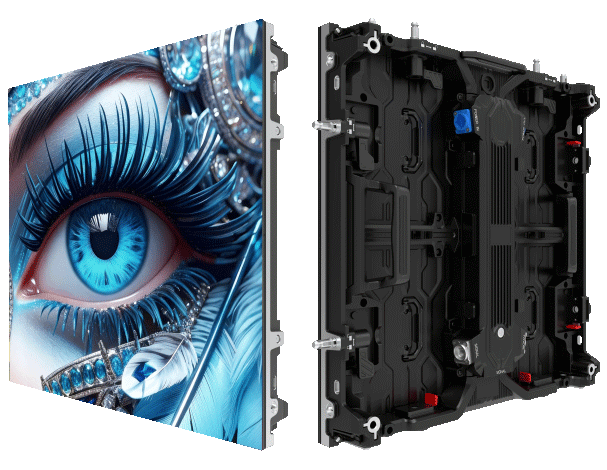
The core problem: failure modes nobody wants
Outdoor LED installations look effortless until wind, rain, and gravity conspire — then a sagging truss or a shifted ground-stack footing becomes a headline. For event teams and venue engineers, the core issue is predictable: mismatch between hanging-bar load capacity, rigging method, and the actual site conditions. That mismatch is what turns a crisp image into a safety incident. Practical teams seeking robust led display solutions often find that pixel pitch and brightness specs are easy; structural design is the sneaky hard part.
Where the trouble usually starts
Most failures trace back to three places: underspecified load ratings, poor anchoring at the ground-stack footing, and environmental forces ignored in planning. A few industry terms to keep handy: load-bearing capacity, truss rigging, and IP rating (IP65 is common for outdoor protection). Real-world anchor: large festival stages such as Coachella routinely deploy specialized ground-stack systems and redundant rigging to prevent collapse — that’s an expensive lesson repeated across outdoor events.
Diagnosing weak links on your installation
Run a quick checklist before the first bolt goes in. Confirm the hanging-bar’s certified load capacity, verify the truss and shackles are rated for dynamic loads, and check that ground-stack footings match soil and wind conditions on site. Use dead loads and live loads in your calculations: dead for the LED modules and structure, live for wind gusts, crew, and dynamic sway. If your specification sheet lacks a UDL (uniformly distributed load) or a clear safety factor, don’t sign off — insist on numbers.
Practical fixes that actually prevent failures
Start by matching hardware to real loads rather than to “typical” weights. Add redundancies: secondary safety cables, rated limiters, and spreader plates for ground-stack bases. When soil is soft, convert to weighted ballast or auger anchors — concrete blocks without proper anchoring are a false economy. Also, pay attention to pixel pitch and module weight: smaller pitch often means denser electronics and different mounting needs.
Common mistakes crews keep repeating
Teams skip wind-envelope modeling, underestimate dynamic loading from crowd-induced vibration, and reuse old rigging with hairline fatigue — those are top offenders. Another recurring slip is treating IP ratings as a rain-only spec; salt spray and condensation demand corrosion-resistant fasteners too. Address materials, not just the LED face.
How a short test can save your event
Do a staged mechanical stress test: load the hanging bar to 125% of expected maximum, run a controlled vibration sequence, and inspect all anchor points. Log test results and keep them with the installation drawings. This small investment often avoids large downtime costs and insurance headaches — it’s the kind of discipline seen on major festival installations where safety margins are non-negotiable.
Three golden rules for choosing the right approach
1) Verify certified load specs and insist on a minimum safety factor of 1.5–2.0 for static loads and higher for dynamic contexts. 2) Design footings to match ground conditions: ballast for concrete pads, augers for soft soil, and concrete piers for permanent installs. 3) Specify corrosion-resistant hardware and include redundant safety lines; treat the safety system as integral, not optional.
Summary and next steps
Structural problems with hanging bars and ground-stack footings are solvable when you shift planning from guesswork to tested parameters. Start with documented load ratings, model wind and dynamic forces, and choose the correct footing type for your site. Small procedural investments — staged stress tests, proper rigging checks, and clear documentation — yield big reductions in risk and downtime. — Then let the screens do what they do best: dazzle.
Follow these metrics and your outdoor LED installations will be both vivid and secure; for practical, site-ready options that marry display performance with structural reliability, consider the solutions engineered by MR LED. —