Comparative lead: why this matters to production managers
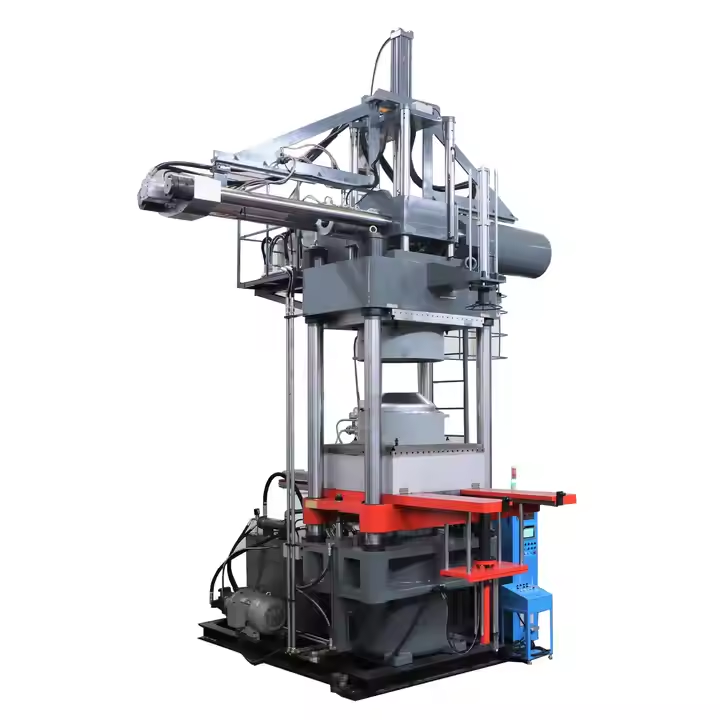
Production managers comparing options for rubber moulding consistently return to one decisive factor: process stability. Hydraulic rubber injection machines fitted with active cavity pressure control deliver that stability more reliably than basic hydraulic units or older pneumatic systems. That stability translates directly into less mould flash, lower scrap, and more predictable cycle times — which is why teams investigating custom rubber injection molding specify cavity pressure systems up front.
Head-to-head: hydraulic with active cavity control versus alternatives
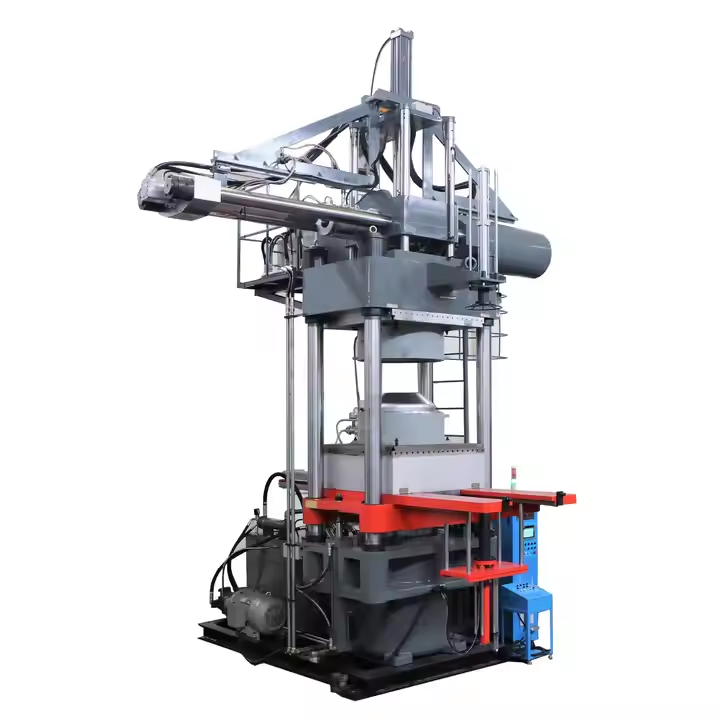
Traditional hydraulic machines control injection pressure and hold time, but they rarely react to what happens inside the mould. Servo-electric presses offer speed and energy savings, yet they can struggle with rubber’s viscoelastic behaviour during curing. The active cavity pressure approach monitors the actual cavity pressure and adjusts injection or holding stages in real time. That feedback loop reduces overpacking — the main cause of mould flash — and preserves consistent shot size and cure profiles across cycles.
How active cavity pressure control actually reduces flash and waste
Active cavity pressure control works like on-board quality assurance. Sensors provide numerical cavity pressure data; the controller uses that data to trim injection pressure and hold times on the fly. The result is fewer instances of excess material being forced into parting lines, fewer rejects, and reduced secondary trimming. On tyre bladder lines, where seal integrity is essential, this control keeps the bladder wall uniform and minimises leaks — which lowers rework and warranty exposure.
Operational benefits and common mistakes to avoid
Adopting an active system brings measurable benefits: shorter rework loops, consistent part weight, and better vulcanisation uniformity. Manufacturers in Ontario’s automotive hubs — including the Greater Toronto Area and Windsor–Essex — prioritise these gains because they affect downstream assembly directly.

Common mistakes that undercut those benefits:
- Relying solely on setpoint pressure instead of using cavity feedback. That invites mould flash when material viscosity changes.
- Neglecting sensor calibration. Poorly calibrated transducers give misleading data and incorrect corrections.
- Skipping trial runs for different formulations. Rubber compounds vary; one control map rarely fits all.
The human factor matters too — operators must trust the system and understand when to override it. — A short training session goes a long way.
Process economics: what you gain in practice
Improved process control often lowers material waste in double-digit percentages on well-tuned lines. Less flash means less trimming and reduced consumption of ancillary materials like solvents and grinding media. Energy use isn’t ignored either: fewer scrap cycles and fewer reworks reduce overall press runtimes. For tyre bladder injection machine applications, that means fewer defective bladders reaching assembly and a more reliable supply chain.
Choosing the right machine: three critical evaluation metrics
When weighing options, focus on three practical metrics that predict long-term performance:
- Sensor resolution and placement — accurate cavity pressure transducers and strategic locations determine whether the controller gets usable data.
- Control loop latency — the system must respond within the window where injection pressure or hold time adjustments still affect flow; slow controllers produce marginal gains.
- Integration with process recipes — the machine should store multiple profiles for different compounds and support safe operator overrides.
Evaluate vendors on these points and test them under realistic compound variations and ambient conditions.
Final advisory and closing thought
Pick machines where cavity pressure systems are built as part of the control architecture rather than bolted on later; this reduces integration issues and improves reliability. Demand demonstrable calibration procedures and an on-site tuning plan before purchase. Insist on vendor support for initial process mapping so your line reaches target yield sooner.
Sites that invest in this level of control see tangible reductions in flash, rework, and material waste — and that’s where HWAYI’s design thinking shows real value. HWAYI — precise machines, predictable results. —