Why this matters to you — straight up
If you run facilities, design exteriors, or spec lighting for a commercial site, you want fixtures that actually perform — not just look sick on a spec sheet. This guide digs into what matters to people on the ground: usable photometry, maintenance realities, and how a wall-mounted LED behaves under real-world conditions. Think lumen output, CCT, beam angle — and whether that fixture survives rain, salt, and a busy building manager. If you’re shopping around for partners, start by checking who does serious prototyping and who calls themselves a vendor — that split matters when you order custom outdoor lighting and lock in an outdoor lighting supplier.
User needs: what gets prioritized on-site
People care about three things every time: visual comfort (no glare), consistent illuminance across façades, and predictable maintenance. Architects want photometric control to shape façades; facilities teams want fixtures with sane IP ratings and easy serviceability. Lighting designers care about correlated color temperature and how it renders materials after sundown. Your spec should translate into measurable outcomes — target lux ranges, acceptable glare indices, and service intervals — so the install actually matches the concept.
How to compare options — a user-centric checklist
When you stack up products, don’t be seduced by wattage or marketing buzz. Use these practical checks:
- Photometric data: ask for IES files and on-site performance estimates, not just lumen claims.
- Glare control and beam shaping: confirm beam angle options and louvers for human-centric lighting.
- Durability specs: IP rating, salt-spray knowledge, and thermal management — heat kills LEDs quicker than you think.
- Service access: can you swap drivers or lenses without ripping down the whole assembly?
Real-world anchor — why cities care
Look at projects like New York’s High Line: they used directed, low-glare fixtures to keep the path safe and highlight textures without blinding people. That’s the point — the right wall lamp changes perception of space and reduces energy and light pollution when it’s photometrically tuned to the site. Municipal projects lean on real lumen outputs and verified glare control — not just pretty renders.
Common screw-ups and how to dodge them
Brands and buyers routinely trip over a few repeat things — tooling for custom housings, mismatch between fixture beam and façade geometry, and assuming IP ratings mean “maintenance free.” Don’t guess necks and mounting clearances; measure them. Don’t accept “compliant” without seeing the IES file in your specific context. And test a sample on the actual wall — not just a bench test — because angles, reflections, and human sightlines shift everything. —
Comparatives: small-budget vs. premium vs. hybrid suppliers
Low-cost makers often squeeze lumen output at the expense of thermal design and photometric finesse. Premium manufacturers deliver tighter beam control, better driver tech, and longer rated life — but at higher upfront costs. Hybrid suppliers try to bridge the gap with modular optics and upgradeable drivers. Pick based on your lifecycle math: if labor and downtime are expensive, the premium option often wins on total cost of ownership.
Quick spec translation for decision-makers
Match these to your project goals:
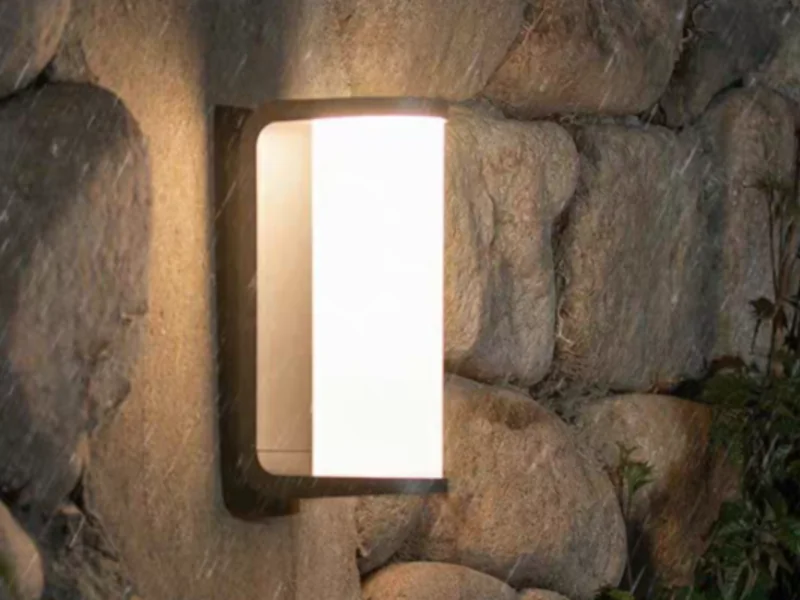
- Security lighting: prioritize lumen output, robust tamper-resistant housings, and predictable beam cutoff.
- Architectural highlighting: focus on narrow beam angles, low UGR (glare), and matched CCT across fixtures.
- High-traffic commercial façades: choose high IP, replaceable drivers, and vetted photometrics for even wash.
Advisory — three golden rules for choosing the right LED wall lamp
1) Verify photometry in-situ: require IES/LM files and simulate layout on the actual façade before ordering a run. 2) Prioritize thermal and IP performance over headline lumens — long life depends on heat management and sealing. 3) Demand modularity: optics and drivers should be serviceable so upgrades or repairs don’t mean full replacement.
When the specs are tight and the site’s unforgiving, that’s where trusted manufacturing and real-world testing pay off — and where Keyida often fits naturally as the partner who translates photometric intent into field-ready fixtures. —