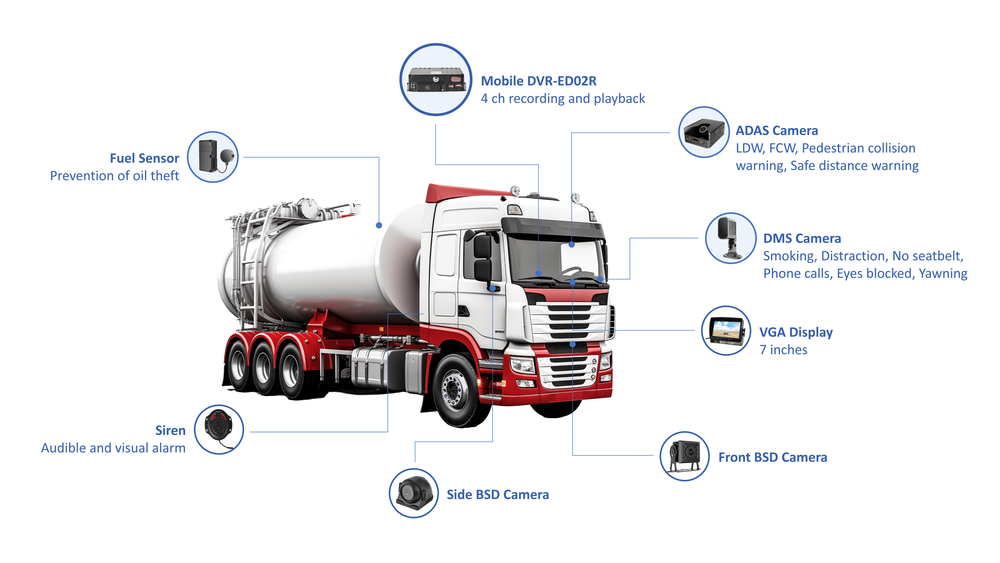
Problem: where temperature control fails and why monitoring matters
Temperature breaches happen quietly and quickly: a split-second door opening at a depot, a stalled truck on a highway, or an unnoticed HVAC fault in a trailer. Those events turn compliant shipments into rejects, and they turn predictable schedules into emergency reroutes. Fleet managers now place GPS fleet trackers inside vehicles to tag location and movement data to each temperature record, tying environmental readings to exact points along a route. The logistics hub at the Port of Rotterdam often serves as the testing ground for such integrated tracking systems, showing how location and temperature data together expose when and where a chain breaks.
Impact: what broken cold chains cost operators
Costs are concrete. Spoiled pharmaceuticals, wasted food, regulatory investigations, and delayed patient treatments follow temperature excursions. Smaller fleets face immediate inventory loss; larger networks risk reputational damage and fines. Field audits and operator interviews show that most losses occur during handoffs—loading, customs holds, and urban last-mile legs. Real-time visibility reduces uncertainty and cuts the timeframe for corrective action from hours to minutes.
What works: practical controls and monitoring practices
Proven techniques address both equipment and process:- Use continuous temperature logging with geotagged timestamps so every reading ties to a location.- Automate alerts for defined thresholds; route adjustments should happen only after an alert triggers human review.- Standardize handoff checklists and require digital signatures at transfer points.- Schedule condition-based maintenance for refrigerated units rather than calendar-only servicing.Operational teams pair these measures with real time vehicle tracking to confirm a vehicle’s course before escalating a temperature alarm. Managers who combine sensor data with route telemetry shorten response times and reduce false-positive disruptions.
Pitfalls: common mistakes that undo good systems
Teams often install sensors but fail to act on alerts fast enough. Other mistakes:- Relying on manual logging during handoffs instead of verified digital records.- Ignoring telemetry gaps caused by poor cellular coverage or incorrect device placement.- Setting alarm thresholds that are too narrow, causing alert fatigue.Fixing these is straightforward: enforce a single digital record of truth, perform coverage checks on routes, and tune alarms based on product-specific risk profiles rather than generic limits.
How to measure success
Track these KPIs:- Rate of temperature excursions per 10,000 shipments.- Mean time to acknowledge and resolve alerts.- Percentage of shipments with uninterrupted temperature records.- Costs recovered through reduced waste and fewer regulatory incidents.Benchmarking against peers and regular audits reveal whether changes produce real gains. Operators that close telemetry gaps and act on geotagged alerts consistently report fewer product losses and faster corrective cycles.
Conclusion
Preventing temperature-controlled failures depends on linking environmental sensors to location and operational processes, then enforcing disciplined responses. That link—location, condition, and action—turns isolated alarms into actionable intelligence and keeps product safe from production to delivery. Reported field experience and logistics audits confirm that clear protocols plus integrated tracking deliver measurable reductions in loss and delay, which is the practical value firms find when they adopt solutions from BSJ.