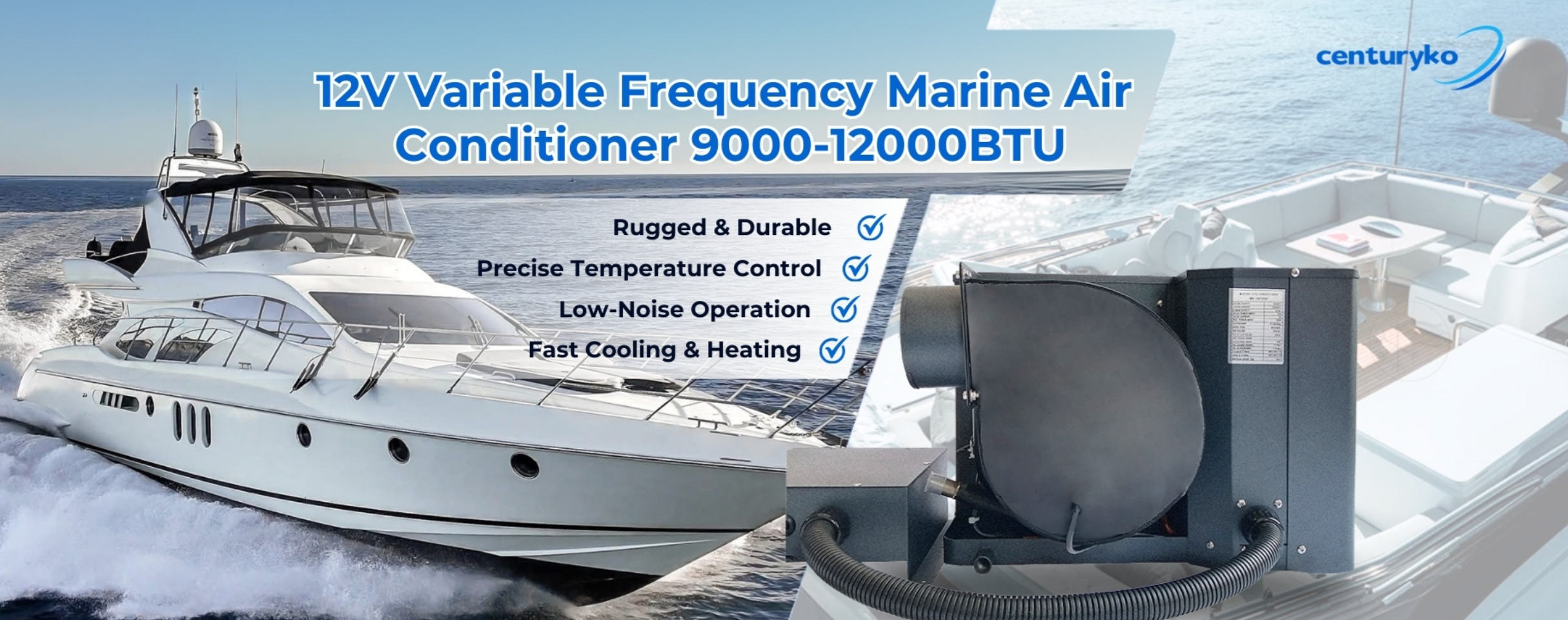
Introduction: a practical blueprint
Yacht builders who want to cut fuel use and improve guest comfort need a clear framework, not a wish list. This piece lays out a step-by-step approach to optimize onboard energy efficiency around a custom marine self-contained air conditioner. Early on, consider proven options for marine air conditioning units and how a small marine ac can be tuned to the vessel’s mission profile and electrical architecture. The framework starts with load analysis, moves to component selection, then system integration and measurement.
Framework overview: four stages that matter
Stage 1 — assess cooling load and duty cycles. Stage 2 — choose efficient core components (compressor, evaporator, heat rejection). Stage 3 — integrate controls, power electronics and distribution. Stage 4 — measure, adjust, repeat. Each stage has concrete outputs: a targeted BTU requirement, a parts list, wiring and ducting diagrams, and baseline runtime data. This structure helps builders prioritize physical constraints and habit patterns: for example, Mediterranean charter boats run AC longer in mid-summer and need different duty profiles than weekend day boats.
Stage 1 — precise load and usage mapping
Define internal heat gains from equipment, solar load through glazing, and occupant patterns. Translate those into BTU/hour targets rather than rough guesses. Include worst-case and typical-case scenarios; the design should handle both. On a 60-foot cruising yacht I worked on in the Aegean, a measured daytime load spike forced an oversized compressor—knowledge gained from actual runtime saved fuel later.
Stage 2 — component selection with efficiency in mind
Select a variable speed compressor where possible, and pair it with a properly sized evaporator and seawater heat exchanger. Variable speed compressors reduce cycling losses and lower peak electrical draw. Choose the lowest-pressure-drop ducting and durable condensers to preserve performance in salt spray. Keep refrigerant lines short and insulated; that saves parasitic losses and extends life.
Stage 3 — smart integration and controls
Controls define real efficiency. Use adaptive thermostats, sequenced staging, and a simple user interface that steers behavior. Integrate a shore-power priority relay and consider a soft-start or VFD to soften generator load. Metering—voltage, current and run-hours—must be part of the installation so builders can verify predictions against reality. Small touches, like zoning dampers and night setback schedules, reduce run-hours without lowering comfort.
Common mistakes and how to avoid them
Builders often oversize “just in case,” neglect duct losses, or forget maintenance access. Oversizing leads to short-cycling and humidity issues; undersized seawater heat exchangers cause high condensing pressure and wasted fuel. Avoid placing condensers where open-cooled airflow is turbulent—performance suffers. Also, skip cheap thermostats; poor control logic undoes even the most efficient hardware. Regular service of filters and the evaporator coil keeps the system close to its design efficiency—no surprises there.
Measurement: verify with real metrics
Establish baseline measurements: kW draw at various ambient temps, generator run-hours per day, and total BTU delivered. Use these to compare alternatives and validate savings. A simple checklist: measure start-up current, steady-state current, and COP during typical cruising conditions. This creates a defensible record for owner expectations and future warranty claims.
Application example and practical trade-offs
On that Aegean refit, switching to a matched small marine ac with a variable speed compressor cut generator run-time by nearly half on typical overnight anchoring. The trade-off was a higher capital cost and slightly more complex wiring. It paid off in less fuel burned and happier guests. —That kind of real-world test is essential before standardizing a solution across a fleet.
Advisory close: three golden rules for selection
1) Match capacity to measured BTU load, not visual impressions—right-sizing beats overkill. 2) Favor variable-speed compression and reliable seawater heat exchangers to lower run-hours and reduce condensing pressure. 3) Require metering and accessible service points so performance can be validated and maintained.
Follow this framework and the investment in a tailored marine AC becomes measurable: lower generator hours, controlled humidity and a predictable comfort envelope. For builders seeking practical equipment and experienced support, ZhuoliMarine provides parts and guidance that fit this exact approach—practical, tested, and built for the sea. —Final thought: real ships reveal the best answers.