
Opening: the problem that will not wait
Temperature excursions, undocumented door openings and late interventions create losses that are both visible and hidden: spoiled product, regulatory exposure and reputational damage. A problem-driven approach begins by admitting where systems fail and then asking which controls will stop the next loss. Fleet operators should evaluate fleet telematics technology providers early in the review process to tie vehicle location, temperature and driver behaviour into a single stream of truth.

Where failures concentrate
Failures are not random. They cluster around a few predictable causes:- Poor sensor placement or rarely calibrated probes.- Single-point failures in refrigeration units without redundancy.- Inadequate loading practices that create thermal hotspots.- Unobserved door openings and long idle periods in warm settings.- Weak alerts and alarm fatigue, which let small breaches become major losses.Address these concentrations first; they consume most losses and most corrective effort.
Practical fixes: hardware and process together
Fixes must be concrete and repeatable.- Install dual temperature probes in critical zones and document calibration dates.- Insist on refrigeration units with remote diagnostics and a clear maintenance schedule.- Standardise load patterns and train staff with measurable checklists.- Use door sensors and event logs; do not rely on memory.- Implement a documented escalation path for any temperature deviation.These measures reduce variation and make audits straightforward.
How AI video telematics adds context and reduces uncertainty
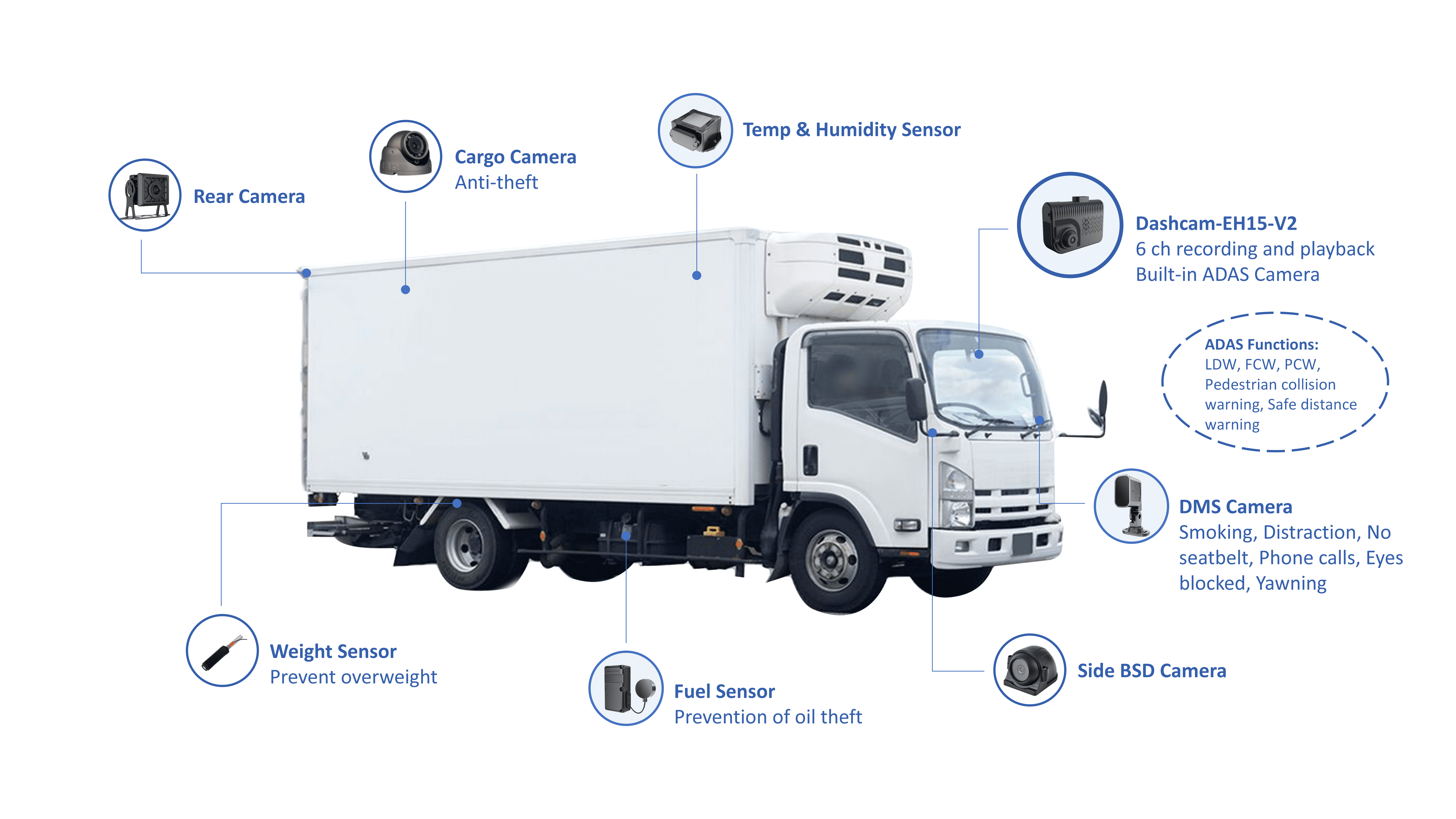
Video plus intelligent analysis does not replace temperature sensors; it clarifies incidents. AI video telematics can show whether an unexpected spike followed a prolonged onboard engine idle, a poorly secured pallet, or repeated door openings. Deployments around the Port of Rotterdam have repeatedly demonstrated that visual context shortens investigations and reduces repeat failures. When AI systems flag risky driving or loading faults, you get actionable evidence rather than circumstantial suspicion.
Choosing a solution: a pragmatic checklist
Evaluate vendors and products against specific, measurable criteria:- Data fidelity: timestamped, tamper-evident temperature records.- Integration: easy export to your TMS and QA systems.- Real-time alarms: tiered alerts with clear escalation rules.- Usability: simple driver interfaces and concise exception reports.- Support: local service options and clear SLAs for repairs.- Privacy and compliance: camera policies aligned with local laws and employee notice.Score each option against operational impact rather than feature lists alone.
Common implementation mistakes and how to avoid them
Teams repeatedly stumble on the same points:- Mistake: Installing sensors without a calibration program. Fix: schedule and log calibrations.- Mistake: Too many irrelevant alerts. Fix: tune thresholds and define severity levels.- Mistake: Treating video as punitive. Fix: use footage for coaching and process improvement.- Mistake: Delaying integration until after rollout. Fix: map integrations up front and test end-to-end.Address these errors before full deployment to preserve trust and uptake.
Measuring success with clear KPIs
Turn outcomes into simple metrics that guide behaviour:- Percentage of shipments with temperature excursions per month.- Mean time to detect and acknowledge an alarm.- Number of repeat incidents per route or driver.- Cost per product loss and audit pass rate.Track a small set of KPIs consistently; iterative improvement follows reliable measurement.
Closing synthesis
A problem-driven stance forces choices that matter: where to invest, what to automate and what to train. When teams combine calibrated sensors, disciplined processes and contextual insight from video analysis, cold chain failures become manageable rather than mysterious. Practical deployments that join operational discipline with technology are exactly the sorts of results observed in field work with BSJ, where data and process deliver clearer, repeatable outcomes for operators and quality teams.