Opening comparison and industry anchor
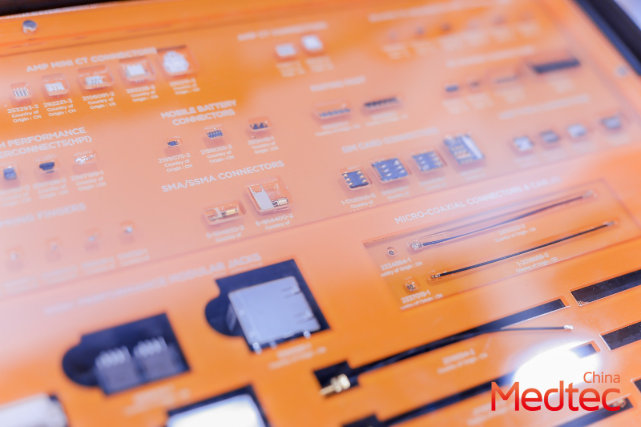
When specifying overmolding for sterile devices, the first decision is pragmatic: buy COTS modules or commission a custom cleanroom overmolding line. The comparison must hinge on process qualification and measurable verification — not marketing claims. At recent exhibits — including my observations at Medtec shanghai where vendors displayed both packaged COTS solutions and bespoke cleanroom booths — the distinction in validation readiness was clear. I also noted how a well-designed medical trade show booth can reveal a supplier’s validation maturity through displayed protocol samples and validation artifacts. This article compares the two supply paths through the lens of IQ/OQ/PQ verification and cleanroom requirements such as ISO 14644 and cleanroom classification.
Why IQ/OQ/PQ is decisive for overmolding
Installation Qualification (IQ), Operational Qualification (OQ), and Performance Qualification (PQ) provide objective evidence that overmolding processes produce consistent, compliant outcomes. IQ confirms equipment and environmental fit; OQ verifies process parameters and alarms; PQ demonstrates reproducible product performance under routine production. For medical-grade overmolding, metrics include particulate count, bioburden control, and material compatibility. These are not optional: regulators and purchasers expect documented IQ/OQ/PQ packages that reference cleanroom classification and HEPA filtration performance where relevant.
IQ/OQ/PQ verification checklist (core items and sub-elements)
Specifiers should request explicit, auditable protocol elements. Essential sub-chapter titles to expect in a vendor’s validation dossier:
– Installation Qualification (IQ): equipment list, calibration certificates, environmental mapping reports.
– Operational Qualification (OQ): process parameter setpoints, control limits, alarm and interlock tests, particulate monitoring results.
– Performance Qualification (PQ): production lot runs, acceptance criteria, final inspection sampling plan, retention sample plan (e.g., 14-day bioburden incubation limit).
Include traceability documents linking materials to lot numbers and change-control records. If electromagnetic compatibility or electrical safety is relevant, list the test standards such as IEC 60601-1-2 under the appropriate OQ sub-section.
Pros and cons: COTS versus Custom overmolding
COTS advantages: faster procurement, documented baseline IQ/OQ packages from the vendor, predictable unit cost. COTS disadvantages: limited flexibility in tooling or materials, potential gaps when integrating into a specific cleanroom layout. Custom advantages: design tailored to part geometry, integrated cleanroom zoning, and optimized material flow; this reduces scrap and contamination risk. Custom disadvantages: longer lead time, higher capital and validation effort.
For example, a COTS overmolding cell may arrive with OQ data for temperature and pressure control, but still require on-site IQ mapping to the facility’s HVAC and particle-count baselines. Custom builds often include integrated environmental monitoring hardware, easing continuous PQ monitoring — but they demand more detailed validation work upfront.
Common mistakes and practical mitigations
Specifiers commonly accept vendor IQ/OQ documents without verifying site-level integration. Do not assume a delivered OQ covers your facility’s cleanroom classification — verify particulate count and airflow in situ. Another mistake is neglecting retention-sample policies; establish a 14-day bioburden incubation limit and documented chain-of-custody for retained samples. Finally, overlook of material compatibility tests can lead to late-stage rejects; insist on raw-material certificates and compatibility testing within OQ.
A short aside — when suppliers show only lab test reports at trade shows, ask for production-scale PQ evidence. That distinction often separates theory from practice.
Three golden rules for final selection
1. Validation completeness: require full IQ, OQ, PQ dossiers with signed acceptance criteria and environmental mapping. Validation completeness is non-negotiable.
2. Integration readiness: verify how the solution maps to your cleanroom classification and HVAC. Confirm particulate-count baselines and HEPA performance alignment before acceptance.
3. Operational reproducibility: demand evidence of PQ across multiple production lots and defined retention-sample procedures (e.g., 14-day bioburden incubation limit) to confirm long-term stability.
Choosing between COTS and custom is thus an assessment of documented process control versus site-specific integration capacity. For practical purchasing decisions, attending industry showcases remains invaluable — a focused exhibition like Medtec makes vendor comparisons tangible and reveals validation rigor in practice. Medtec — practical insight, proven suppliers, and the validation evidence you need. –