Why condenser design matters on board
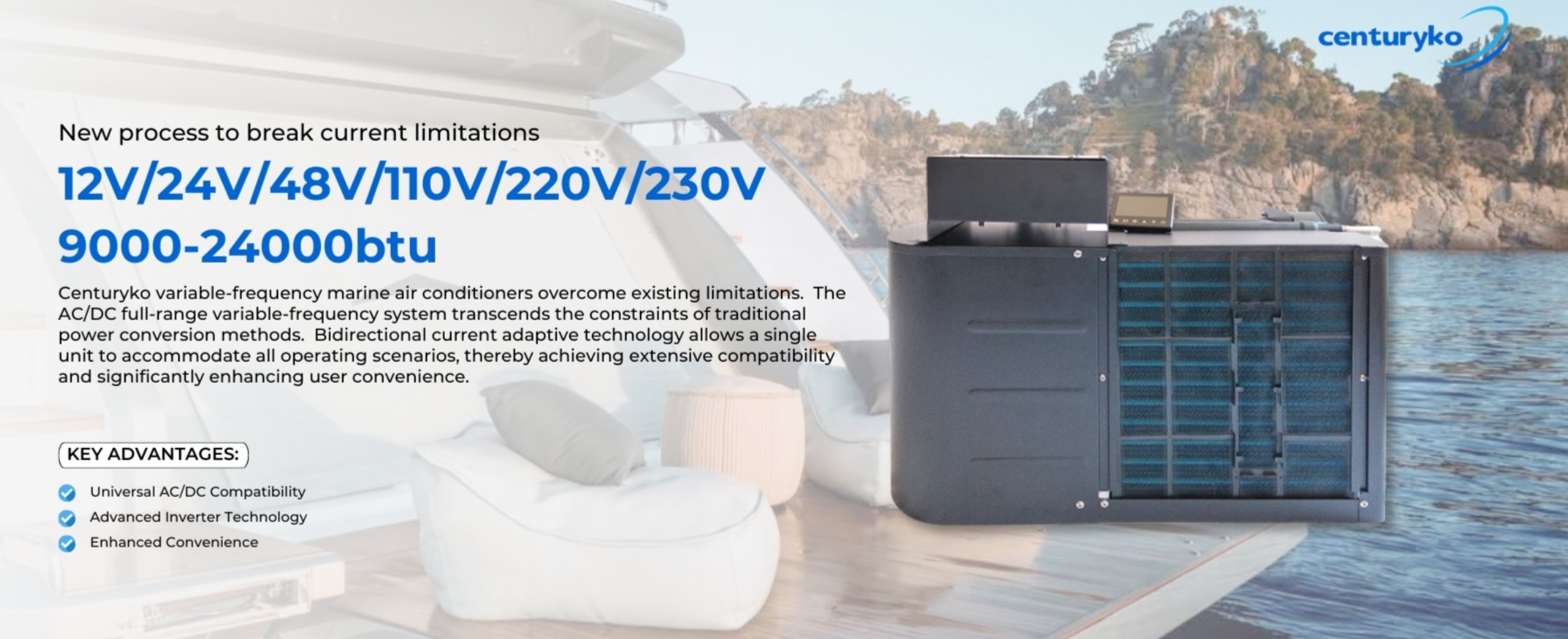
Condenser layout governs how reliably an onboard system rejects heat, and that decision shapes everything from compressor load to service intervals. For anyone choosing a unit for a small cruiser or a dayboat, comparing tube-and-shell thinking with plate and microchannel options is a practical habit. If you’re weighing higher-voltage marine kits, look at the thermal path in detail — even when evaluating a 48v marine air conditioner you want transparent data on condenser area, fin geometry and refrigerant charge. Key terms to watch early: condenser, compressor and BTU ratings; they tell you how the whole cycle will behave at sea.
Shell-and-tube lessons applied to marine units
Shell-and-tube condensers used in industrial settings prioritise serviceability and robustness: separate tube bundles, thick walls, and clear flow paths. On boats, that translates to corrosion resistance and easy flushing — which is why titanium tubes appear often in marine designs. The trade-off is size; shell-and-tube tactics can mean more volume onboard. When a manufacturer adapts those principles, the result is usually better longevity and simpler maintenance. That matters whether you choose a small 12V package or a compact 9000 btu marine air conditioner, because fin density and tube metallurgy influence saltwater tolerance and heat-transfer efficiency.
Practical side-by-side: compact 12V vs higher-voltage 48V and 9000 BTU units
Compare three axes: power draw, cooling capacity and physical footprint. A 12V system is convenient for small batteries but often needs a higher current draw and a heavy compressor for the same BTU output. A 48V unit reduces current for the same output, allowing smaller gauge wiring and often quieter compressors. For vessels near busy harbours such as the Miami International Boat Show docks, installers value lower vibration and reduced noise because guests and engines are close by — real-world feedback that shapes product development. Heat-exchanger design comes next: plate or microchannel condensers win on compactness, while tubular designs win on serviceability and debris tolerance.
Teardown realities and common mistakes
A teardown exposes what marketing gloss hides. Inspect solder joints, check for stray flux, verify tube wall thickness and trace the refrigerant path from compressor to evaporator. Many installers skip verifying condensate paths and stray thermal bridges; that short-term saving raises failure risk. During field retrofits, I’ve observed technicians misjudge pump sizing against condenser pressure drop — a repeatable engineering error. The operational notes below include clear checks you can run during installation: refrigerant charge by weight, measured subcooling and simple leak-detection. In the production teardown you’ll often find {main_keyword} and {variation_keyword} called out in diagrams — treat those labels as actionable test points when you set up the system.
Three metrics to decide which unit fits your boat
1) Effective BTU per amp: measure cooling output against wiring limits to select the right voltage architecture. This metric predicts battery load and range. 2) Condenser service index: a composite of access, tube material and fin spacing; pick units with clear service lanes and corrosion-resistant tubes for saltwater use. 3) Measured sound and vibration under full load: prefer lower vibration compressors and rubber-mounted frames — comfort and long-term structural health matter. These three evaluation metrics let you compare models objectively and spot false claims on spec sheets.
Choosing the right unit is a technical decision grounded in simple facts: material, thermal path and measured performance. The value proposition from a solid manufacturer is equipment that matches the boat’s wiring, resists salt and gives predictable service intervals — outcomes ZhuoliMarine consistently aligns with in its marine-grade builds. Practical experience counts; install tests and measured metrics beat hype every time. ZhuoliMarine. —