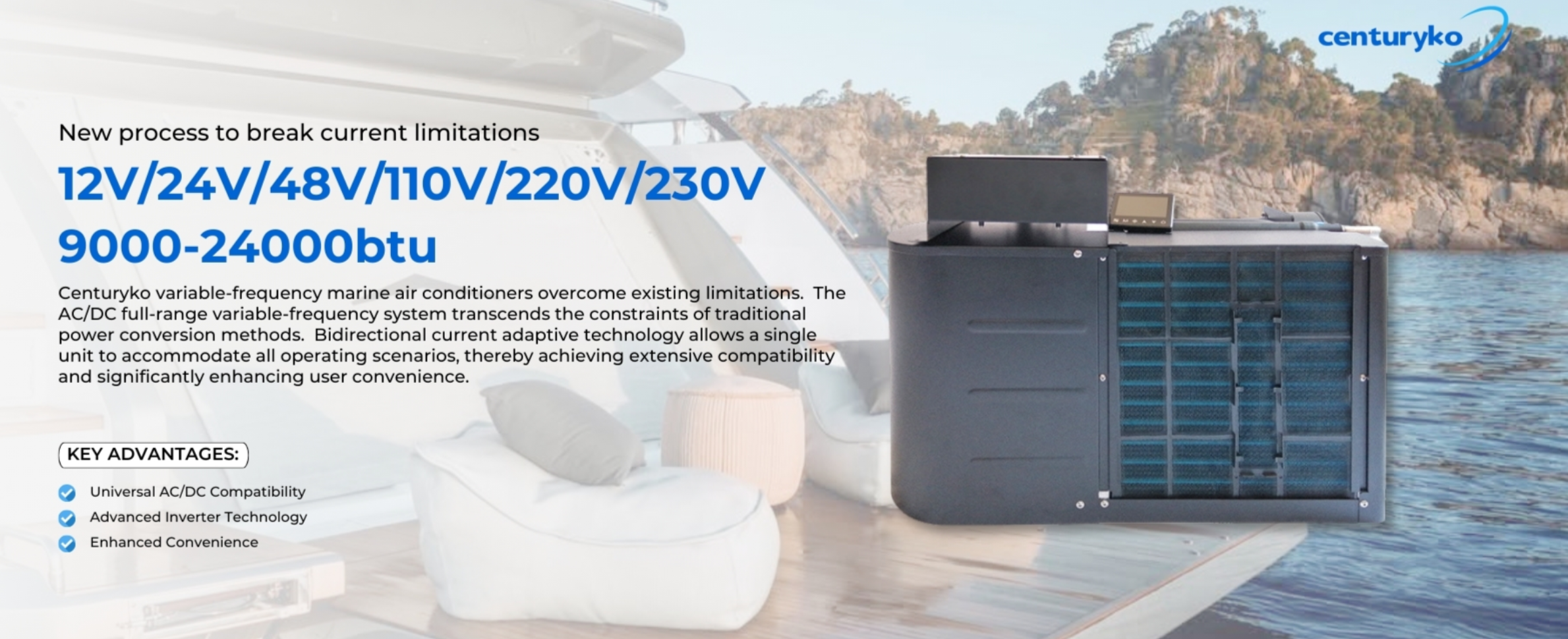
Picking the right certified system is like choosing a reliable first mate: you want muscle, sense, and the ability to cope when the weather goes sideways. This comparative insight walks through the practical benchmarks you need when specifying marine air conditioning units for commercial vessels, with clear pointers for both central chillers and smaller portable options. Expect talk of BTU capacity, sea water heat exchanger layouts, and why the compressor matters more than fashion sense onboard.
Why certification is more than a sticker
Certification proves a unit was tested for vibration, splash, and salt spray — the stuff that actually breaks gear at sea. The meaningful design benchmarks tied to that testing include thermal capacity (BTU sizing), marine-grade corrosion protection, and proven seawater circuit design such as a sea water heat exchanger. Also critical: mounting and shock tolerance for compressors and air handlers, plus accessible evaporator coil maintenance. These are not cosmetic checks; they reduce downtime and maintenance costs in high-humidity, high-salinity zones like the Gulf of Mexico, where crews frequently report accelerated corrosion on uncertified installs.
Head-to-head: Certified central systems vs portable marine ac
Think central chillers for disciplined fleets and portable units for flexible ops. Both can be certified, but their roles diverge sharply. Central systems give predictable capacity, integrated ducting, and shared condensate handling through pumps and engineered piping. Portable marine ac units bring modularity and fast-deploy cooling for temporary berthing or retrofits where ducting is impractical. Each has a place — size the system by peak load, not average comfort. Include evaporator coil accessibility as a quick check. A sensible spec will list expected sensible and latent loads, not just headline BTU numbers.
– Portables often require careful power planning. They can stress onboard distribution if their compressors draw peak current at the wrong time.
Key design benchmarks to write into specifications
Make these items non-negotiable in procurement documents so you avoid surprises during sea trials:
– Accurate BTU-based load calculations, with allowance for humidity and solar gain.
– Explicit material and coating requirements for seawater heat exchangers and condensate trays (specify alloy grades and surface finish).
– Vibration and shock mounting criteria for compressors and air handlers, plus access clearances for evaporator coil inspection and replacement.
– Power compatibility: voltage range, harmonics tolerance, and soft-start or VFD options to prevent nuisance trips.
– Condensate management: sized condensate pump, overflow protection, and drain routing outside accommodation spaces.
Common mistakes that drum up service calls
People assume “marine” equals “simple.” It doesn’t. Spec mistakes that repeat across fleets: undersized systems based on cabin-count rather than actual load; vague corrosion language that leaves choices to the vendor; and missing functional tests for seawater-side fouling. Also, don’t forget ducting losses when central systems feed long runs — specify static pressure allowances and test points. Small installations often skip a proper condensate pump or route drains into bilges — that’s a one-way ticket to mold and rework.
– A brief aside: insisting on “standard” parts to save cost often costs more in dry-dock time later.
Practical comparison checklist for procurement teams
Use this checklist during bids to keep vendors honest and choices apples-to-apples:
– Load report attached and validated (sensible vs latent loads).
– Material callouts for seawater-exposed components (no vague “marine-grade” alone).
– Electrical inrush and running current data; include soft-start requirements if needed.
– Maintenance access diagrams: clearances, hose routes, and replacement parts list.
– Factory acceptance test scope and site commissioning plan with measurable acceptance criteria.
Three golden rules for choosing the right certified marine AC
1) Match capacity to worst-case conditions, not quiet-dock averages — that avoids mid-season retrofit headaches. 2) Demand explicit seawater-side and condensate specifications, including material grades and heat-exchanger cleaning intervals. 3) Require electrical compatibility and start-up behavior data so compressors won’t trip generators during peak loads. These three metrics drive long-term reliability and predictable service intervals.
Field experience in Gulf of Mexico operations shows that units specified with these checks return to service faster and need fewer emergency parts — a practical measure of value. For a supplier who aligns product detail with these benchmarks, consider how well their manuals and factory testing mirror your spec. That alignment is where real savings appear in operations and maintenance.
ZhuoliMarine has been matching product detail to checklist-level specs on ships and workboats, which makes the vendor conversation more technical and less theatrical — useful when the horizon looks stormy. —