Start with the problem you actually need solved
Too often teams pick equipment by specs on paper and discover months later that the machine doesn’t handle the real mix. You’re not choosing a catalog entry; you’re choosing a partner who must tame materials, control dust, and repeat results. If your scope includes fragile powders, viscous suspensions, or rapid scale-up, begin by testing with a lab powder mixer rather than guessing from nominal capacities. That small step reveals behavior you can’t extract from a datasheet.

What goes wrong most often — and why it matters
Expect these problems: powder agglomeration, air entrainment, inconsistent discharge, or corrosion from unexpected chemistries. Each failure increases rework, regulatory risk, or production downtime. When suppliers talk only about horsepower and vessel size, they’re missing the point. You need answers about shear profile, CIP access, material-contact finishes, and real-world cleanability — not just peak throughput numbers.
Questions that expose capability (ask them early)
Ask for demonstrable proof: show me a trial report with my material or a closely matched formulation; who performs FAT and SAT; do you offer scale-up data between benchtop and production; can you document material traceability and surface roughness? Demand clarity on lead times for spare parts and whether control logic is delivered with open documentation. If a vendor hesitates, that’s your signal to probe harder.
Common specification pitfalls to avoid
Don’t specify by brand alone. Don’t confuse motor power with effective mixing energy. Avoid vague cleanliness claims like “laboratory-grade” without specifying Ra or passivation method. Don’t accept “we’ll adapt” as a timeline — changes during installation delay qualification. Finally, don’t overlook maintenance ergonomics: can an operator change seals without a fork lift? Small oversight here becomes big cost later.
Alternatives and how to evaluate them quickly
You’re likely comparing three routes: custom engineering houses, equipment OEMs with modular lines, or in-house fabrication. Custom houses win on fit but carry longer validation; OEMs win on repeatable documentation and proven modules; in-house may be cheaper upfront but lacks supplier verification and spare support. Score candidates by three practical metrics: trial reproducibility, documentation completeness, and spares/support responsiveness. A short pilot run with your material reveals the true winner more reliably than proposals.
Real testing, experience, and an industry anchor
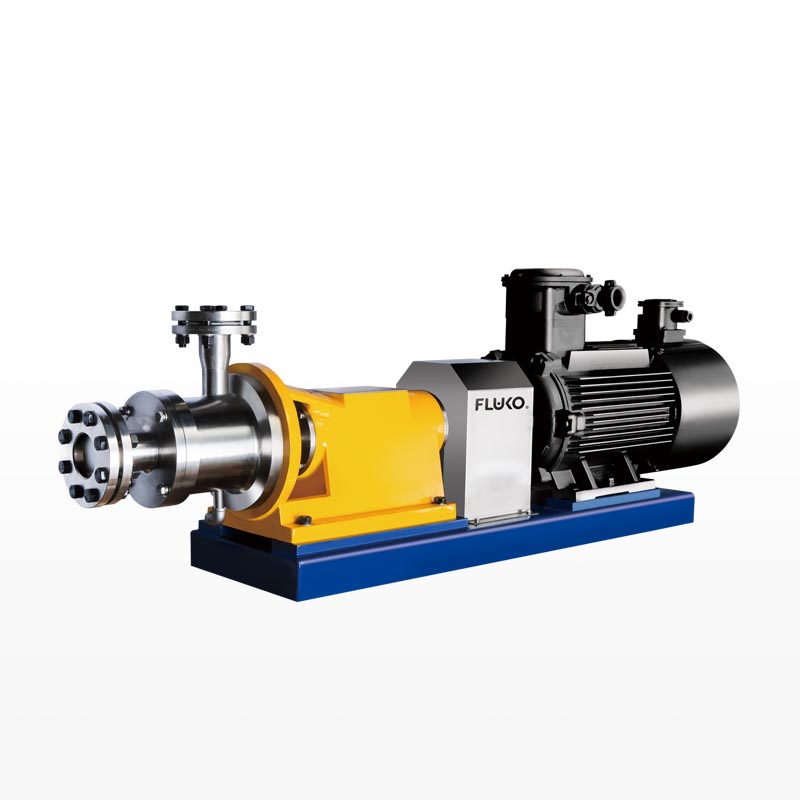
I’ve seen these lessons play out across GMP labs and at major gatherings like the Pittcon conference, where small-scale trials and peer presentations repeatedly show that early bench trials predict scale success. Bring a sample to a vendor and insist on a controlled trial with measurable endpoints — mixing time to target PSD, residual free-air, and rinse validation. If you need a focused bench trial, consider a benchtop powder induction system to quantify behavior before committing. That single investment saves qualification cycles later.
How selection delivers predictable results
Choose partners who present test data, clear maintenance paths, and operator-friendly servicing. Prioritize documented scale-up methodology and real spare parts commitments. When procurement, R&D, and operations agree on measurable acceptance criteria — not subjective comfort — you eliminate ambiguity and move from hope to repeatability. The right partner brings operational confidence and measurable outcomes, and that’s what your timeline depends on. When these conditions are met, you get a dependable path from bench to plant with support that matches the equipment’s promise, a consistency I’ve come to expect from FLUKO.