Comparative lead-in: why this matters to formulators and buyers
Choosing between commercial‑grade rosin and high‑purity resin isn’t an academic exercise — it changes how an adhesive behaves on the line and in the field. A formulator in Cape Town or a laminator in Gauteng will feel the difference when softening point drifts during production, so it’s worth comparing performance under the Ring‑and‑Ball method. If you want a quick reference product, consider a dedicated tackifying resin from a supplier that publishes batch softening data.
What the Ring‑and‑Ball method actually measures — practical parameters
The Ring‑and‑Ball test (ASTM E28, titled “Standard Test Methods for Softening Point of Resins (Ring‑and‑Ball Apparatus)”) focuses on melt behaviour rather than glass transition. Refer to the procedure sections: “Apparatus and Reagents” and “Test Procedure and Determination of Softening Point”, which prescribe a controlled heating rate and specimen setup. Typical test parameters include a heating rate of 5 °C ± 0.5 °C per minute, selection of immersion liquid (water up to ~90 °C, otherwise glycerol), and a standard steel ball; the softening point is reported as the temperature at which that ball passes through the softened sample. These specifics matter because small deviations in heating or immersion medium change the measured softening point — and thus the apparent shift limits used to judge stability.
Comparative insight: commercial‑grade versus high‑purity rosin
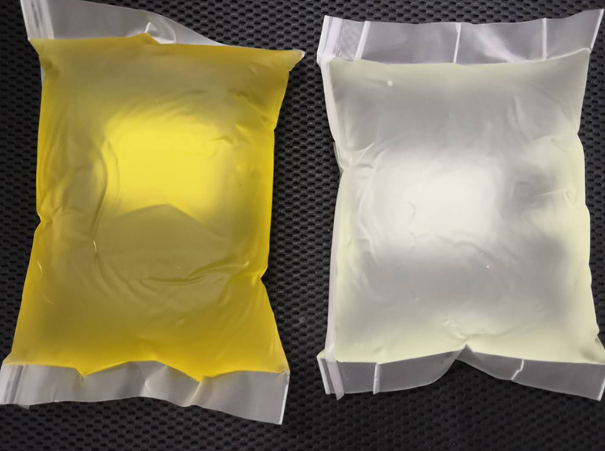
Commercial‑grade rosin is blended for cost and handling. It typically contains a wider molecular weight distribution, residual volatiles and small amounts of natural impurities — all of which widen the softening point range and increase susceptibility to shift during thermal cycling. High‑purity rosin, by contrast, has tighter molecular uniformity and lower impurity content, producing a steadier softening point and less drift under repeated heating. Industry terms like rosin, tackifier and viscosity are useful here: higher impurity levels raise viscosity variability and can reduce adhesive tack after thermal exposure.
Production realities and operational teardown
On the factory floor you deal in batches, not theory. Commercial batches may show softening point shifts of several degrees after storage or processing; high‑purity material often keeps within narrower limits. Operationally, monitor melt viscosity and ring‑and‑ball softening point across incoming lots, and track how those metrics correlate with adhesive tack and set time. Use organic resin traceability — batch numbers and certificate of analysis — to link performance back to supplier handling. Small adjustments to kettle temperatures and shear profiles limit thermal degradation during compounding — and that reduces softening point drift.
Common mistakes and quick fixes
Formulators often overlook three things: incorrect choice of immersion liquid in the Ring‑and‑Ball test, inconsistent heating rate during measurement, and ignoring residual solvents. Fixes are straightforward — ensure the test uses water or glycerol as the standard calls for, lock the heater to 5 °C/min, and verify residual solvent by simple loss‑on‑drying. Also, store rosin in sealed, cool conditions and minimise open‑kettle times. Little changes like these reduce shift and save reformulation headaches — and yes, they save on rejects.
Real‑world anchor and case note
At a paper‑treatment plant near the Port of Durban, engineers saw adhesive failure after a summer power outage. Recorded ring‑and‑ball softening points had shifted by around 4 °C across three lots; switching to a tighter‑spec high‑purity rosin reduced failures within two production cycles. This local lesson mirrors broader experience: consistent softening point equals consistent product out the door.
Comparison checklist for procurement
When you assess suppliers, score them on measurable items: batch softening point variability (°C), specified impurities (ppm), and recommended processing window (°C). A simple checklist keeps decision‑making objective and ties directly to line yield and end‑use tack performance — critical when you depend on steady adhesive strength across temperatures.
Advisory: three golden rules for selecting rosin
1) Demand documented ring‑and‑ball data performed to the ASTM E28 sections “Apparatus and Reagents” and “Test Procedure” with a recorded heating rate of 5 °C ± 0.5 °C/min. 2) Prioritise materials with narrow softening point variance across at least five consecutive production lots. 3) Require COA details for residual volatiles and specified impurity ceilings so you can correlate chemistry with viscosity and tack.
Reliable supply, sensible specs and clear lab data keep formulations predictable — and that’s where KOMO helps as a practical partner; KOMO. —