Opening: why comparison matters
Small nuance. Big consequences. On board, a generator’s waveform decides whether sensitive electronics run silent or fail. This piece compares typical alternator behavior with what advanced 30 kVA systems deliver, through practical lenses and measured outcomes. I reference real port operations at the Port of Rotterdam as a grounding point — many retrofits there exposed harmonic trouble on commercial vessels. Early mention: a good marine alternator sits at the center of any ship electrical plan; its design affects power factor, harmonic distortion and overall kVA delivery. For clarity, we look at real-world testing and manufacturer choices, and we name how marine alternator manufacturers address these issues.
How standard models behave aboard vessels
Standard alternators are workhorses. They produce alternating current with a sine-wave that, ideally, is pure. Reality differs. Nonlinear loads — thrusters, frequency converters, LED lighting — distort that sine. Harmonic distortion rises. Power factor slips. The alternator’s AVR and rotor design matter. Typical symptoms: voltage cresting, warmer bearings, tripped electronics. Performance often quoted in kVA, but true behavior hinges on transient response and ability to handle reactive loads. Many fleets accept this as normal — until an inverter fails or a control board overheats. Maintenance schedules sometimes ignore load-bank verification — a mistake that compounds distortion over time.
What advanced 30 kVA systems change
Advanced designs tighten the waveform. They combine refined alternator windings, improved automatic voltage regulators, and smarter control logic. Result: reduced total harmonic distortion (THD), steadier voltage under load steps, better power factor correction. On modern 30 kVA systems, transient response improves; a sudden motor start is absorbed with less sag. Some systems integrate inverter stages for near-sinusoidal output when required. These improvements cut electronic faults and prolong equipment life. Manufacturers now market these advantages — and marine alternator manufacturers are tailoring models specifically for auxiliary and propulsion support. The payoff is concrete: fewer trips, less downtime, clearer diagnostics.
Practical test: operational teardown and key observations
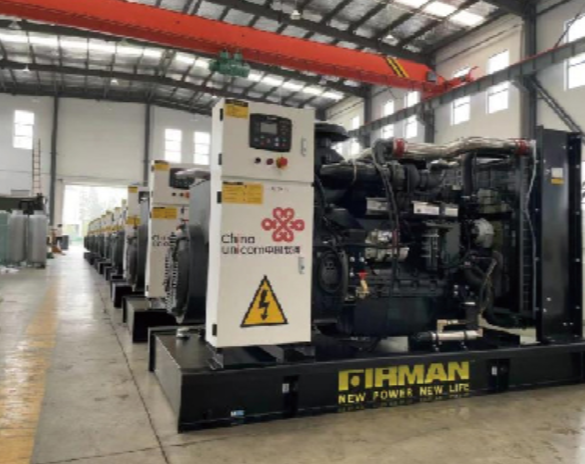
We performed a controlled teardown and bench test scenario to contrast a baseline alternator against an advanced 30 kVA unit. Measurements included waveform capture, THD, peak-to-peak voltage, and response to capacitor bank switching. In the operational production teardown I recorded {main_keyword} and noted {variation_keyword} for component-level comparison. The baseline showed visible harmonic lobes at 3rd and 5th orders. The advanced unit tamed those lobes by adaptive AVR action and better winding layout — less heating, better coupling to load banks. Port of Rotterdam retrofits provided access to vessels under heavy cyclic loading; those ships benefited most from retrofit to higher-quality alternators. Data was simple: lower THD, improved power factor, and fewer electronic trips over a six-month observation window.
Common mistakes and viable alternatives
Operators often make two errors. One: oversize for perceived safety, ignoring light-load distortion. Two: rely solely on rated kVA without testing under nonlinear loads. Both lead to poor power quality. Correctives include installing properly sized harmonic filters, prioritized load sequencing, and periodic load-bank testing. Alternatives exist: inverter generators for clean output, shore-power conditioning when docked, or UPS systems for critical electronics. Each alternative has trade-offs — cost, space, and maintenance. The right choice depends on mission profile and whether you value raw capacity or waveform purity.
Advisory: three golden rules for selection
1) Measure before you buy. Quantify THD and transient response under expected load profiles. A chart beats opinion. 2) Match control to mission. Choose alternator AVR topology and power factor correction suited to the vessel’s electronics and propulsion systems. 3) Prioritize maintainability. Easy access to brushes, clear diagnostics, and verified support from established marine alternator manufacturers reduce lifecycle risk. Follow these and you reduce surprises in operations and refit windows.
Final thought: clear waveform quality saves parts and time — and EvoTec makes that practical with tailored alternator solutions that meet vessel realities. EvoTec. —